



Gold, whose value has spiked by more than 55% since the 2008 financial crisis, is notoriously difficult to trace. Once mined, it can follow a maze-like path to market, passing through intermediaries that mix and melt it with other sources, often erasing signatures of its origin in the process. The result? Illicit gold routinely slips into products, from jewelry to smartphones and electric cars. To stem the flow of illicit minerals, the gold industry is turning to an unlikely source: blockchain, the technology behind cryptocurrency.
Proponents say blockchain can bring transparency and rigor to a risky industry with consumers increasingly eager to know where their gold comes from. By recording transactions in “blocks” that can be viewed but not altered, blockchain-backed ledgers make it easier for buyers to track gold and assure its provenance, and harder for ill-intentioned actors to fake receipts.
“This will help consumers, investors, and market participants to trust that their gold is genuine and has been responsibly and sustainably sourced,” reads a joint 2022 release from the World Gold Council and the London Bullion Market Association.
The two industry associations, which include many of the world’s largest mines, traders and refiners, say they are developing an “international system” that will record each gold bar’s transaction history in a blockchain ledger from mine to vault. (To date, no timeline has been given for when the system will come into force).
But blockchain’s capacity to clean up a murky industry still seems limited.
A checkered tale of blockchain in Brazil
In Brazil, where an investigation found that nearly half of the country’s exported gold (229 tons) between 2015 and 2020 showed “high evidence of illegality,” Fênix DTVM, one of five purchasers authorized by Brazil’s Central Bank to buy, has embraced blockchain. The company announced in March that it delivered its first fully traceable gold bar using a blockchain-backed ledger. And, as of July, Fênix said 100% of its gold was blockchain-traceable.
The Fênix announcement touted a partnership with Berlin, Germany-based Minespider, a company that offers a blockchain-backed platform designed to make mineral supply chains more sustainable. Minespider, which has also worked with Volkswagen to track materials used in their batteries, says its software makes it easy for buyers to verify the origin of materials. Using an app, miners and purchasers tag gold transactions with a “Product Passport,” a QR-coded certificate that includes the gold volume, its origin, the seller’s tax ID and other data.
“Fully committed to ensuring sustainability and responsible business practices at every stage of the supply chain,” read a release from Fênix and Minespider, “The company [Fênix] goes beyond national requirements.”
But recent evidence has cast doubt on that commitment: An October Pulitzer Center report revealed that Federal Police are investigating Fênix for buying about $100,000 in gold from mines owned by Grota, an organization that trafficked cocaine in the Amazonian state of Pará. Moreover, following a raid on Fênix’s headquarters in Cuiabá, Mato Grosso, Fênix confirmed it had purchased gold from three companies the Federal Police are investigating for illegal gold laundering.
The company, currently cooperating with investigators, told Mongabay that the mines in question were not part of Fênix’s blockchain system. “The last negotiation with them was done last year,” Fênix CEO Andrei Santos said in late October, “when blockchain was still being implemented.”
Earlier this month, Brazilian newspaper Fohla de Sao Paulo reported that the Court of Pará suspended Fênix from doing business in the state, for purchasing gold of suspicious origins.
This ruling against Fênix highlights how easy it is for a buyer, well-intentioned or not, to purchase gold from a bad actor.
The suspension is the latest in a string of scandals surrounding gold mining in Brazil. Other investigations showed that DTVMs accepted fake receipts from miners illegally extracting gold in Indigenous territories. The dirty gold was then sold to one of Brazil’s biggest exporters, BP Trading, which shipped it to major refiners around the world. For the Yanomami, Brazil’s largest Indigenous group, lax oversight and a boom in illegal mining triggered a health crisis and stripped nearly 4,000 hectares (9,880 acres) of land since 2018, a 309% increase compared with previous years.
“That’s how distributors [DTVMs] have always operated in Brazil: they close their eyes and accept wherever you say it’s coming from,” said Santos, months before the Pulitzer report and the court ruling in Pará. “Meanwhile all this stuff gets financed from Venezuela, from Indigenous reserves, [from] the destruction of the rainforest.”
Until recently, DTVMs bought gold on “good faith,” meaning they were not liable if miners lied about where and how their gold was mined. The good faith provision, part of a law passed in 2013, paved the way for so-called “ghost mines,” where bad actors would claim gold came from an officially registered mining concession when in fact it was exploited from Indigenous lands or protected areas.
Wittingly or not, DTVMs buy and sell illegal gold to larger centralizers (or export it themselves overseas to refiners), where it eventually finds its way into jewelry, bank bullion (gold or silver in physical form), and technology. Because illicit gold is laundered early in the supply chain, downstream companies struggle to know where their gold comes from, much less how it was mined. The Responsible Jewellery Council’s Code of Practices, the jewelry industry’s biggest certification, doesn’t require full traceability, and only a few companies know or share the origin of their gold.
While there’s still room for progress, the situation in Brazil improved last March when the Supreme Court overruled the “good faith” principle as unconstitutional. The ruling, which came into force in July, will boost financial controls, including requiring electronic receipts. Instituto Escolhas, an environmental think tank that worked with Congress on the new law, said blockchain was pivotal to a traceable gold supply chain, a “major ally in protecting the forest and its people.”
With Minespider’s platform, Fênix DTVM can guarantee a blockchain-backed digital record of invoices, a clear improvement over the norm of easily forged paper receipts. But that record is only accessible to industry members, not the public, which Instituto Escolhas said was key to accountability. Moreover, Fênix doesn’t tag its gold with a chemical signature, which the NGO argued should be used to create a traceable database, or “library,” of Brazilian gold.
Blockchain isn’t a panacea
The Fênix investigation spoke to deeper challenges inherent in the quest for traceable gold. Experts such as Bram Ebus, an investigative reporter based in Bogotá, Colombia, who has focused on organized crime and gold in the Amazon while consulting for International Crisis Group, cautioned that blockchain is only as good as the data that are fed into it. “How do you really know about that data?” he said. “I’m skeptical about the idea of full transparency.”
Other experts warned that blockchain shouldn’t be viewed as a panacea to an industry rife with social and environmental risks.
“Blockchain isn’t synonymous with responsible mining,” observed Christina Miller, who runs a sustainable jewelry consulting service and works for the nonprofit Amazon Aid, which is supporting this series on gold mining for Mongabay without editorial input. “It’s not telling you communities are able to invest in other livelihoods, or that there’s a remediation plan,” Miller continued, “or if women are being exploited or have fair access to economic opportunities. It just tells you that a purchase was made and ownership of the goods was transferred along a documented path.”

Artisanal gold miners, as they are known in the industry, are among the world’s poorest and most neglected populations. Using rudimentary techniques, often in dangerous conditions, they produce about 20% of the world’s gold and contribute roughly 40% of global mercury pollution, exposing themselves to toxic vapor and contaminating the global food chain.
A few companies take a miner-centered approach to blockchain in a bid to clean up the sector. One is London-based Minexx, which, along with traceability, connects miners with other social services, such as access to finance and technical experts who can advise them on more profitable and environmentally friendly methods.
“Blockchain and traceability software are a good tool,” said Emmanuel Beau, chief investment officer of Minexx. “But if you just apply it like lipstick on a pig, without trying to transform the value chain, you’re not going to solve the problem at scale.”
The startup, which in 2022 helped a mine export the first blockchain-tracked gold bar in Ghana, envisions a blockchain that benefits miners, incentivizing transparency from the bottom up. But Minexx has a limited track record in the field, and Beau admitted the company has struggled to get off the ground financially.
To show that it’s operating responsibly, Fênix has turned to a certification called “Certimine,” a digital tool developed by Minery, a Brazilian company that operates a digital mineral marketplace. And Fênix isn’t the only company scrambling for the Certimine seal of approval: According to Mining.com, at least 120 mining operations in Brazil were approved in the “Certimine” certification in the first half of 2023.
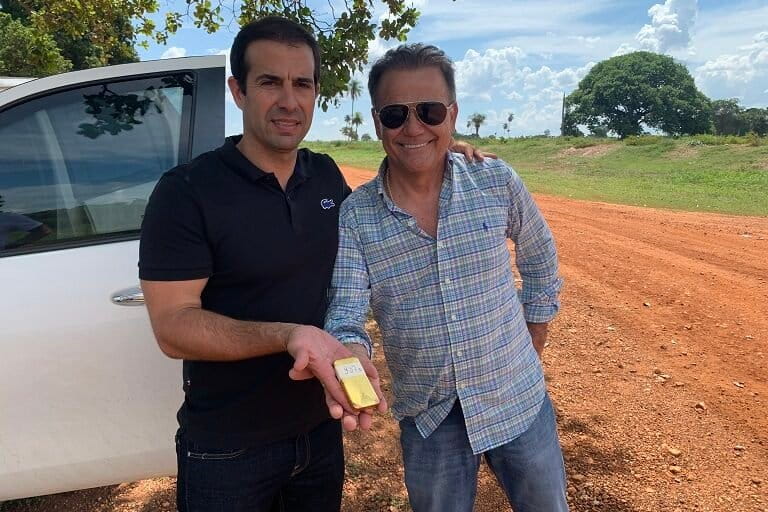
Certimine said its due diligence criteria complied with “the highest international standards.” But the company doesn’t share its criteria publicly and didn’t respond to Mongabay’s request for more information. Some experts worry that such opaque standards, which are on the rise, give industry members a fig leaf to cover over internal shortcomings.
“It’s a challenge we’re seeing,” said Gina D’Amato, executive director of the Alliance for Responsible Mining, an NGO dedicated to improving the artisanal and small-scale mining sector. “Anybody can say we’ve been certified by X,Y or Z. But sometimes these so-called certifications are very weak. That helps some market actors say they’re doing their job when they’re not.”
The Alliance for Responsible Mining certifies small-scale mines in the Fairmined Standard, which D’amato said safeguards against negative impacts, like child labor and habitat destruction, and conducts third-party audits. Buyers pay a premium for Fairmined gold. According to D’Amato, a recent “mushrooming” of weaker standards has made it harder for more robust certifications like Fairmined, which require third-party audits and public reporting, to compete.
The toxic shadow of mining and mercury
During a conversation at the company’s headquarters in Cuiaba, Brazil, and later over email, Santos, Fênix’s CEO, said his company went above and beyond what was required in Brazil.
“We visit the supplier, we certify their mining capability, their production, we monitor them with satellite images, we send texts after each gold transaction, we monitor every increase in volume,” Santos said. “And with all these measures in place, it’s still not enough.”
A shrewd and garrulous talker who peppered his sentences by repeatedly using the first name of his interviewer, Santos took pride in laying out the red carpet. Following a tour of the company’s offices, he took a reporter on a helicopter ride over the mines he either owned or oversaw. Looking down on environmental destruction wrought from grafting mines into verdant, rolling hills, it was difficult to see the clean and conscientious operation to which Santos so often referred.
While based in Mato Grosso, Fênix sources from eight large mines and 50 medium-sized mines across Brazil, including from its own state as well as, Goiás, Paraná, Minas Gerais and the Amazonian State of Pará, where the mining company Grota is under investigation for trafficking narcotics and illicit gold. Fênix acknowledged the challenges in vetting suppliers, but insisted that engaging with miners, on a personal basis, is the only way to create change.
“You can buy recycled gold,” said Santos. “You can say it’s responsible and you don’t have anything to do with the destruction of the rainforest. But is that the right thing to do? No. You have to be part of it. You have to help solve the problem.”
One problem Santos admitted he had yet to solve was how to eliminate mercury, the heavy metal miners used to amalgamate gold. One of the World Health Organization’s top 10 chemicals of major public health concern, mercury has an especially toxic legacy in the Amazon, playing a major role in the ongoing health crisis in the Yanomami Indigenous Territory. A study released in May found more than 20% of fish sold in six of Brazil’s Amazon states had mercury levels above the WHO’s acceptable limit.
“Mercury elimination is not a simple process like people sell,” said Santos, referring to global efforts to transition toward alternative methods. “Recovery gets extremely complicated.”
Like most countries, mining with mercury is legal in Brazil, despite international efforts to phase out its use. Fênix said that by requiring his suppliers to follow the government’s safe handling procedures, it did more than most. The company also said it was sourcing from a mine that, with support from the Swiss Better Gold Initiative, a nonprofit run by Swiss gold industry members to support artisanal miners, was transitioning to a mercury-free technique called intensive leaching.
While a few operations in the Amazon have managed to go mercury-free, the ones that do remain the exception, not the rule: Without incentives and technical know-how to mine cleanly, nearly all small-scale miners, or garimpeiros as they are known in Brazil, still rely on mercury as the cheapest and easiest way to get gold out of ore.
Can the market help?
In 2022, several big refiners in Switzerland came under fire for sourcing gold likely mined illegally in Indigenous territories. Following a meeting with Brazilian Indigenous leaders, six of the refiners pledged “not to deal with gold from indigenous territories of Brazilian Amazon” and to take measures such as “tracing and identifying” the metal’s movements from its sources.
But as long as Brazil’s gold supply chain remains opaque, it’s not clear how they will keep their pledge, except by boycotting Brazilian gold altogether, a solution backed by some activists and Indigenous leaders.
Some critics of the gold industry argue that refiners and downstream companies should help by paying extra for responsible gold, including traceability systems like blockchain.
“We’ve had European refiners who say they want to help,” said Beau of Minexx, “but it’s just talk. They don’t want to step up and buy traceable gold.”
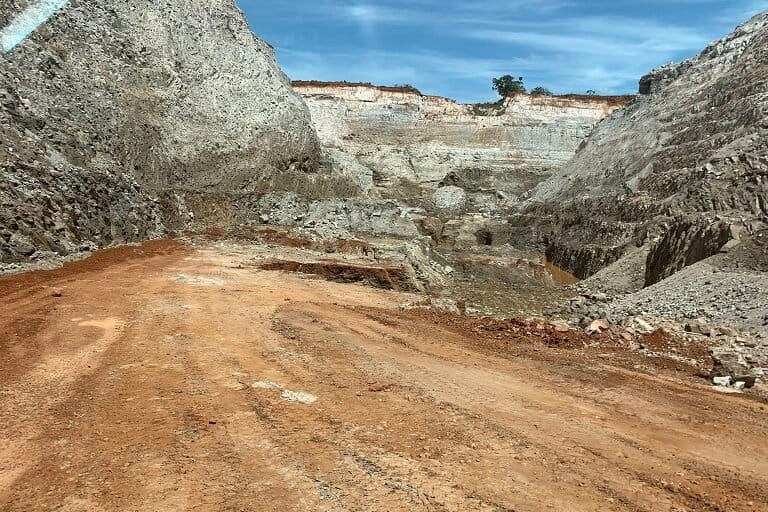
The LBMA, which authorizes refiners to sell in the London market, the world’s largest, reported that in 2021 less than half a percent of gold bought by LBMA-accredited refiners came from responsible small-scale sources. For their part, refiners said they shied away from artisanal sources due to the risks and a lack of consumer demand for premium-tagged gold.
“There has been some progress but it’s a day-to-day challenge to be able to sell this gold,” said Antoine de Montmollin, CEO of the Swiss refiner Metalor, in a recent interview. “There is absolutely no economic gain on this.”
But even as refiners try to weed it out, illicit gold continues to slip into the market, in Brazil and far beyond. “Gold is the only metal that has legs,” said Santos. “It will walk anywhere. Anywhere.”
Blockchain can help, but without systemic change, illicit actors will always remain a step ahead.
Funding for the research and writing of this series of articles was provided by Amazon Aid Foundation.
Citations:
Global Mercury Assessment 2018. (2019). Retrieved from United Nations Environment Programme website: https://www.unep.org/globalmercurypartnership/resources/report/global-mercury-assessment-2018
Steckling, N., Tobollik, M., Plass, D., Hornberg, C., Ericson, B., Fuller, R., & Bose-O’Reilly, S. (2017). Global burden of disease of mercury used in artisanal small-scale gold mining. Annals of Global Health, 83(2), 234. doi:10.1016/j.aogh.2016.12.005
Making Mercury History in Artisanal & Small-Scale Gold Mining. (2023). In Conference of the Parties to the Minamata Convention on Mercury Fifth meeting. Retrieved from https://minamataconvention.org/sites/default/files/documents/information_document/UNEP-MC-COP.5-INF07-PlanetGOLD-phase-1-projects_English.pdf
Banner image: Image © Valentina Ricardo/Greenpeace.
FEEDBACK: Use this form to send a message to the author of this post. If you want to post a public comment, you can do that at the bottom of the page.
This news is republished from another source.