

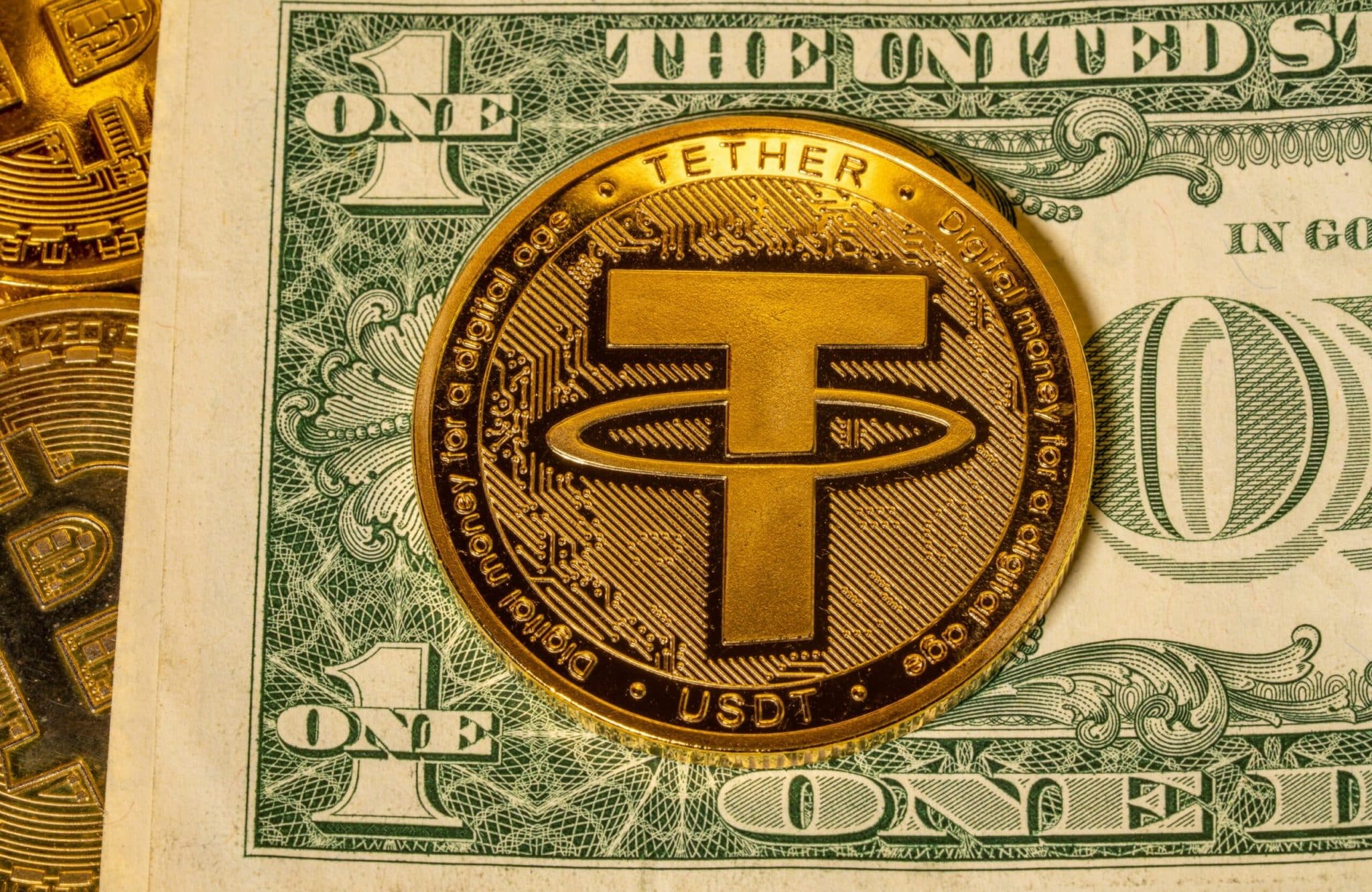

Leading stablecoin Tether (USDt) has emerged as the most popular for crime, but does this mean that Tether USDt is tainted? And, as some pundits ask ‘is it the largest Ponzi Scheme ever?’ – deep dive to find out about the latest Tether criticism amid Lugano.
Tether has stolen the spotlight in the neon-lit underworld of cryptocurrency crime, becoming the go-to stablecoin for illicit activities. This rise to notoriety occurs amidst an overall decline in the crypto sector’s crime rate.
USDT was associated with $19.3 billion in illegal activities in 2023, a decrease from $24.7 billion in the previous year, according to a report by TRM Labs.
By comparison, the second-largest stablecoin, USDC, was linked to $428.9 million in illicit activity – just 2.22% of the scale of Tether’s criminal underworld.
Bloomberg, who posted the report on X, has received a flurry of criticism, in one instance, a user hit back that the US Dollar fiat plays host to immeasurably more criminal activity – “Actually, that was the United States Dollar. Look into it.”
Tether USDt is #1 for Funding Terrorism in the Cryptocurrency Sector
In 2023, USDT on the Tron blockchain was identified as the most used currency for financing terrorism. According to reports, Tron accounts for 45% of all criminal activity, with Ethereum and Bitcoin following at 24% and 18%, respectively.
As the world’s largest stablecoin, Tether is designed to maintain a constant value of $1, backed by cash and bond reserves. Does it really? No. It’s more of a fractional reserve bank for Bitcoin meaning Tether’s reserve dollars aren’t exactly backed 1-to-1 in their supply (contrary to claims).
Despite this Tether is the most traded cryptocurrency due to its stability, in response to the allegations, a Tether spokesperson criticized the report’s findings, suggesting a misinterpretation of data.
Indeed, recent years have seen the company make substantial efforts to cooperate with law enforcement around the world, and in a push for transparency, it has begun providing regular attestations confirming its reserves.
The significance of these increased enforcement actions by Tether became clear during the beginning of the conflict in Gaza when Tether moved to freeze 32 wallets connected to Hamas.
The Rise of Stablecoin Geopolitics: Is Tether USDT Russia’s New Currency?
Furthermore, USDT has found an increasingly prominent role in geopolitics. Despite sanctions, Russia has found ways to bypass financial isolation following the invasion of Ukraine in 2022, first through offshore oil trading, then tech exchanges via third countries, and now digital currency transactions like Tether.
The US and UK are currently investigating $20B+ crypto transactions via Tether and Garantex, a Russia-based exchange, to obstruct financial support for Putin’s military actions in Ukraine.
The investigation is currently ongoing due to cryptocurrency transactions’ complex and secretive nature. However, there is no immediate evidence of any wrongdoing, and the claims remain allegations for the time being.
This news is republished from another source.